What is a Secondary Dwelling and Why Should You Consider One?
Your property's got a hidden value - one that could be worth another 30% in value and an extra 27% in rental income. The Gold Coast, in particular, is facing a rental shortage, with fewer properties and rents up 10% in just 12 months. Meanwhile, Aussie families are changing too - nearly one in five households is a multi-generational family, and that's set to rise to 24% within a decade.
A secondary dwelling on your property is just what's needed to address these market realities. Savvy property owners are building granny flats, studio apartments and detached units to bring in an extra income stream and create some flexible living space.
This guide is here to show you how to unlock your property's earning potential. You'll get the lowdown on the financial returns, the practicalities and the approval requirements for secondary dwellings - and we'll cover everything from small secondary dwelling designs to the specifics of the regulations in Queensland so that you can make informed decisions about your property investment.
What is a secondary dwelling, and what types are there?
A secondary dwelling is a self-contained living space on your existing property - and it's got to have four basic elements to be considered habitable: a kitchen, bathroom, toilet and living area. Without all these elements, your structure is classified as non-habitable.
Granny flats are the dominant secondary dwelling option, and you've got several choices - detached backyard units, converted sections of your existing home or new additions attached to your main residence. Each one delivers the same result: more living space without having to subdivide your land.
Getting a handle on the difference between habitable and non-habitable classifications is crucial for protecting your investment. Backyard studios and lifestyle pods can't include kitchen or laundry facilities, so they're limited to being non-habitable dwellings, which affects how many structures you can have on your property and what approvals you'll need.
Small secondary dwelling options
State regulations set different size limits, and what counts and what doesn't can get a bit tricky. NSW caps floor area, while some Queensland councils stick to 70 m² or 40% of your primary dwelling's gross floor area - whichever is smaller. Some areas in Queensland even let you go up to 80m² for small second dwellings.
Don't count external features toward size restrictions - things like patios, verandas and garages don't add to the floor area. Unenclosed decks and pergolas are also off the hook.
In Tweed Shire in NSW secondary dwellings (granny flats) are permitted on lots larger than 450 m2, generally limited to a maximum floor area of or 20% of the principal dwelling’s total floor area, Secondary dwellings are considered as part of the main dwelling house for the purpose of site coverage calculations. - building permits are still required.
Key differences from main residences
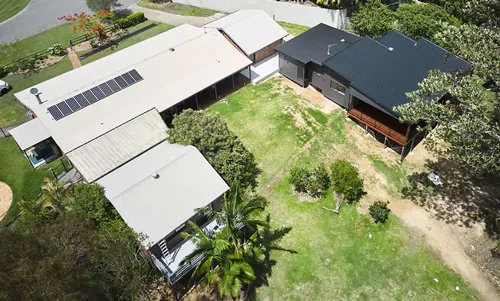 There are some specific restrictions when it comes to secondary dwelling construction. You can only have one secondary dwelling per lot, regardless of how big your property is. These structures can't be subdivided or sold separately from your primary dwelling.
Service connections have to link to your main house. You can't have separate electricity, water or sewerage connections - or separate rubbish collection. Your secondary dwelling shares the same street address and letterbox as your primary dwelling - and you'll have to use the same driveway access, even if you've got multiple street frontages.
Parking requirements are a bit more complicated, too - you'll typically need to add an extra space beyond what your primary dwelling needs.
Queensland made a change in 2022, removing occupancy restrictions. Homeowners can now rent their secondary dwellings to anyone, creating new income streams while helping address housing supply challenges.
Financial Benefits of Building a Secondary Dwelling on Your Property
Make money from your backyard.
Your unused backyard space can produce a steady income for you. Quality granny flats in NSW are delivering rental income of between $27,000 and $44,000 per year - or $535 and $840 per week. Prime locations and proper access can command even higher rents: up to $764.50 per week.
These returns are way ahead of traditional property investments. Rental yields above 7% are standard, while high-quality secondary dwellings deliver gross yields of 12 to 18%. Many investors see 15% annual returns, which is way above the 6.8% average ROI on all real estate investments.
Increase your property's value
When you build a secondary dwelling, you'll instantly increase your property's value. It's a no-brainer that will pay off in the long run. CoreLogic figures show that properties with granny flats tend to sell for around 30% more than similar homes without them - a pretty handy boost in instant equity that can actually match or even exceed the cost of construction after factoring in government grants and tax benefits.
Buyers are after the dual income potential - your property will really stand out in a competitive market, attracting both yield-hungry investors and families looking for a flexible living option.
Tax benefits and depreciation opportunities
Granny flats come with some serious tax advantages. For instance, the average 5-year depreciation deductions are around $8 to 12K, while first-year claims average $18K- and that's just the start. Building structure depreciation alone hits 2.5% per year, plus you get to claim accelerated write-offs for fixtures and appliances.
Rental income brings even more tax-deductible goodies - you can claim maintenance costs, insurance premiums, property management fees and loan interest to reduce your taxable income.
The lower cost of secondary dwelling investment
Construction costs range from $260,000 to $640,000, with a typical build falling around the $385,000 mark. That's much more affordable than traditional investment properties in the Gold Coast, which typically cost between $764,000 and $1,200,000. You could build 3 or 4 granny flats for the cost of one duplex, making it a very accessible wealth-building strategy across Queensland and the other states.
Practical Ways to Use Your Secondary Dwelling
A secondary dwelling can serve up a whole lot of purposes throughout your property ownership journey. The beauty of it is, you get to decide how you use the space - whether that's for family needs or to generate some extra income.
Multi-generational living arrangements
 You see an awful lot of families doing things differently nowadays. In fact, multi-generational households have rocketed by 22% between 2016 and 2021 - and your granny flat is the perfect solution for aging parents or adult children who want to be close to the family, but still have their independence. With a separate entrance and kitchen, plus private outdoor areas, the kids can live with you without getting under each other's feet. You can all save on living costs, and the grandparents help out with the kids while the adult kids contribute to household expenses. Please see the further article on Multigeneration renovation of existing homes and complete Custom builds.
Home office or business space
Professionals need a dedicated workspace away from household distractions, and a granny flat can provide it. Consultants, accountants, financial advisors and creative types can all claim depreciation on business equipment, as well as instant asset write-offs. Having a separate workspace will also improve their productivity and provide legitimate tax deductions for running expenses and occupancy costs.
Guest accommodation solution
Having a separate guest accommodation is a godsend for visitors. No more disrupting the household with house guests - they get their own private space with a separate entrance. And that's a big plus for you, as you don't have to worry about entertaining guests in your main home.
Short-term rental opportunities
You can tap into the holiday rental market and earn some extra cash through platforms like Airbnb and Stayz. In the Gold Coast, Sydney, and Melbourne, two-bedroom granny flats can earn weekly rents of $455 to $900. See live rental listing on realestate.com.au for the rental market.
Planning and Building Your Secondary Dwelling
Getting your head around regulations and council requirements
 Each state has its own approval process, and you need to know what it is. NSW and the Gold Coast, for instance, requires a minimum lot size of 450 m2 for complying development, while in some parts of Queensland, they've relaxed the rules by allow granny flats to be rented out to anyone, not just family members as long as your witih a building envelope size of less than or equal to 80 M2 and to the rear or the primary resiedce, you comply witihn the Gold Coast shire.
Gold Coast Residential Secondary Dwelling land and size requirements
Council assessments will depend on local environmental plans, so it's worth checking those out too. Residential zones R1 to R5 generally allow for secondary dwellings, but if you're in a bushfire-prone area, there may be extra hoops to jump through. Gold Coast City Planning regulations and building set out are outlined here. BUT in general, if you have a street frontage of 12M, and more than 450 m2, you comply; for a smaller lot size, you may still be able to build, but will need a development application (DA) for that smaller lot.
If your land and the distance between the old and proposed secondary properties are greater than 10M, with a 12M frontage and, let's say, a 600 m2 block, you should be able to build without a full DA and be compliant. A Private certified can authorise building works. Again, please check with the council prior to undertaking any building process, as different suburbs within the Gold Coast do have different rules, especially Fire zoning and canal locations.
Granny flat designs that make the most of space
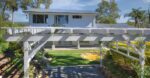
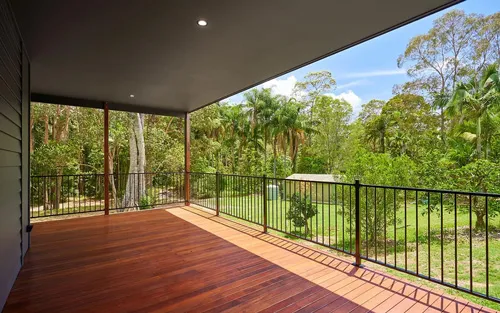
Architect-designed layouts can range from 34 to 80 m², depending on your needs. Smart features like Murphy beds and integrated storage can help you make the most of the space you have. In our example, the Secondary Dwelling in Worangary was architecturally designed as a new build with two bedrooms and en-suites, with a sprawling deck taking in the local bushland views.
Choosing between DIY and professional builders
If you go the DIY route, you can cut costs upfront, but you'll give up trade discounts and expertise. Professional builders, on the other hand, have a far higher success rate of getting their plans approved (95% compared to 60-70% for general contractors). Plus, they can help you avoid the pitfalls of trade conflicts and ensure you're compliant with regulations.
What to expect on the building front
The actual construction phase will typically take 10-12 weeks once you've got your permits sorted. But before that, there are 6-8 weeks of pre-construction planning, getting your site approved and all that jazz. And as for costs, a mid-range 50m² build will set you back between $298,700 and $449,500.
State-specific rules on secondary dwellings
Queensland is actually a bit of a mixed bag when it comes to council regulations - some regions will allow 90m² floor areas, while others limit it to 80m² on smaller blocks. But the one thing that does remain constant is the need to get building approval, no matter what.
What You'll Take Away
Secondary dwellings turn your backyard into a cash cow - and they're solving some serious housing needs across Australia.
- Build a rental income stream: Well-designed secondary dwellings deliver 12-18% rental yields, significantly outperforming standard property investments.
- Create instant equity: Your property is worth a pretty penny when you're done, often covering the construction costs through increased market value.
- Adapt to changing needs: Whether it's housing family members, creating a workspace, accommodating guests or generating short-term rental income, your secondary dwelling will adapt to your needs.
- Enter the property investment market affordably: With construction costs between $260,000 and $640,000, getting into property investment is more accessible than buying another investment property.
- Work with streamlined approvals: Queensland has given the green light for dwellings under 60m², while the Gold Coast has no restrictions. The Queensland government is considering rental restrictions, which would make the building process a whole lot easier. Contact your local Queensland council for more information.
Getting it right comes down to choosing the right design for your property and understanding the local council's requirements. When you plan smart, you'll create a financial asset that will keep working hard for your family's future.
Conclusion
A secondary dwelling can be a game-changer for your property, turning it into a versatile, income-generating asset that offers practical solutions to modern housing challenges. Whether you're after rental returns of 12-18%, wanting to accommodate family members or boost the value of your property by 30%, a granny flat can deliver all that and more.
So the first step is to research your local council's requirements and start looking at designs that best suit your property. With a bit of planning and the right designer, you can turn your granny flat into a valuable asset that will make your life a whole lot easier - and your bank balance a whole lot healthier.
If you're still not sure what's possible, why not take a look at some of our past projects? That should give you a good idea of what we're capable of and help with your research on a secondary dwelling or granny flat.

Craig Preston, Contract Builder on the Gold Coast
If you're thinking of building a secondary dwelling on the Gold Coast, do your research and consult with someone professional - like Risen Developments - to make sure it gets done right.
If you get your planning right, you can create a fantastic space that your family will love for years to come.
Let's get started. The next step is to get in touch with Craig, the Master Builder and owner at Risen Developments.
With over three decades of experience, we've got what it takes to finish the job on time and on budget. We've helped hundreds of homeowners build their dream homes on the Gold Coast and surrounding areas. Give us a call.
We've been doing this for a long time, and we're confident we can help you achieve your vision. So don't delay - get in touch with us today, either by giving us a call or sending us an email. Risen, your local building and construction company on the Gold Coast, is right here, awaiting your contact.
🏡 Common Secondary Dwelling questions when building with Risen
What exactly is a secondary dwelling, and what are the basic requirements?
A secondary dwelling is essentially a separate living space on the property where your main home is situated. You'll need the essentials like a kitchen, bathroom, toilet, and a living area to call it habitable. They can be self-contained units in your backyard, a makeover of some existing space, or even an extension of your main residence.
What are the size restrictions for secondary dwellings in different states?
Each state has its own rules regarding how large a secondary dwelling can be. In Tweed Shire of NSW, secondary dwellings (granny flats) are permitted on lots larger than 450 m2, generally limited to a maximum floor area of or 20% of the principal dwelling’s total floor area. For example, anything over 60 square meters is off-limits - that's the maximum floor space allowed.
On the Gold Coast, councils generally cap them at 80m² or 40% of the primary dwelling's footprint, whichever is smaller. Some regions are a bit more lenient, though, and you might even find that a limit of up to 90m² is allowed in a few places. Keep in mind: these size limits exclude patios, verandas, and garages.
How much rental income can you expect from a secondary dwelling?
If you build a solid secondary dwelling, you can expect to rake in some high rental income. In the Gold Coast, for instance, weekly rental prices are typically between $460 and $800. That translates to an annual income of $23,920 to $41,600. And the good news is that rental yields are often way higher than what you'd get on a standard property, with quality secondary dwellings consistently pumping out gross yields of 12% to 18%.
What are the main rules for building a secondary dwelling in Queensland?
Queensland made the process a bit easier by reducing the complexity and rental occupancy planning permits for most small second dwellings on properties at least 450m² in size, as long as they're under 80 square meters. However, you still do need a building permit to get the ball rolling. And just to be clear, the dwelling needs to be fully self-contained with a kitchen sink, somewhere to prepare food, a bath or shower, and a working toilet and sink.
How much does it cost to build a secondary dwelling, and how long does it take?
The construction costs can vary, but on average, you're looking at anywhere from $260,000 to a whopping $640,000 to build one of these. And if you're wondering, most builds come in around $385,000. From start to finish, the process usually takes 10 to 12 weeks after you get your permits sorted. But before that, you'll need to budget for 6 to 8 weeks for pre-construction planning, site checks, and obtaining the necessary approvals.